

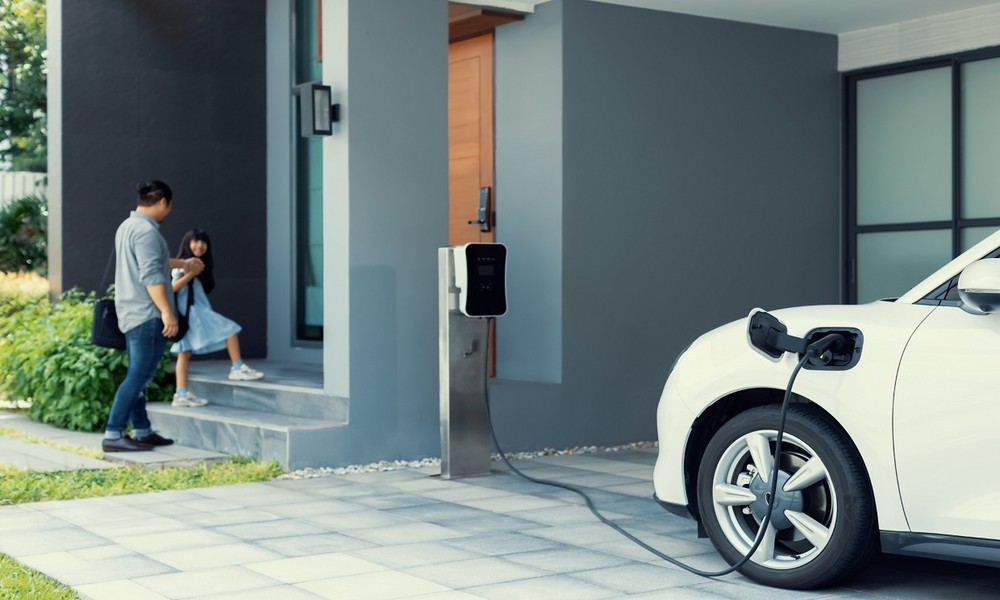
As electric vehicles become more common, homeowners are rethinking how they charge their cars. While public charging networks continue to grow, many EV owners prefer the convenience of charging at home.
This is where the decision to install EV charger at home becomes important. Beyond basic charging, smart home charging solutions offer added control, efficiency, and long-term value, making them a practical investment for modern households.
Core 5 Benefits of Smart EV Charging at Home
Once homeowners decide to install EV charging point at home, the next step is choosing the right type of charger. Smart charging stations stand out because they offer features and benefits that go beyond simple power delivery.
- Cost savings through smart scheduling
Smart chargers can automatically schedule charging during off-peak hours when electricity tariffs are lower. Users without this feature may pay up to 18.1% more per MWh, making optimization financially significant. - Dynamic load balancing for electrical safety
A smart EV home charger monitors total household power usage and adjusts charging speed in real time. This prevents circuit overload and reduces the need for costly electrical upgrades. - Improved battery health and longevity
By managing charging cycles and minimizing heat generation, smart chargers reduce stress on the EV battery, helping extend its lifespan. - Remote monitoring and control
Through mobile apps, users can:- Start or stop charging remotely
- Track real-time energy consumption
- Receive alerts for interruptions or issues
- Integration with renewable energy sources
Many systems can sync with rooftop solar panels, allowing homeowners to prioritize clean, self-generated energy for EV charging.
Smart vs Traditional Home Chargers
To better understand the value of smart charging, it helps to compare it with traditional options.
| Aspect | Traditional Home Charger | Smart EV Home Charger |
| Charging Experience | Requires manual start and monitoring each time | Automatically manages charging with minimal user input |
| Ease of Use | Limited control once plugged in | Controlled via mobile apps with real-time visibility |
| Energy Efficiency | Charges whenever plugged in, regardless of tariff | Schedules charging during off-peak hours to reduce costs |
| Safety & Power Management | Basic protection against overload | Dynamically adjusts power to prevent circuit overloads |
| Adaptability | Static performance with no upgrades | Improves over time through software and OTA updates |
| Grid & Energy Awareness | Operates independently of grid conditions | Can respond to grid demand and optimize energy usage |
| Future Readiness | Meets current needs only | Designed for evolving energy systems and multiple EV usage |
Why Now Is the Right Time to InstallWhy Now Is the Right Time to Install
As EV adoption grows in India, home charging is quickly becoming a default part of EV ownership rather than an optional upgrade. In fact, according to EV Blogs, over 68% of EV owners in India rely primarily on home or workplace charging, highlighting how central it has become to everyday usage.
One of the biggest advantages cited by EV Community, today is cost efficiency. Home charging in India typically costs around ₹5-₹8 per kWh, while public fast charging can range between ₹12-₹24 per kWh depending on location and speed.
This means charging at home can be 40-60% cheaper, making it the most economical long-term option for EV owners.
Timing also plays a key role in infrastructure costs. Installing a charger early allows homeowners to take advantage of existing electrical capacity and avoid future retrofitting expenses. As EV adoption increases, upgrading electrical systems later may become more complex and costly.
There is also a clear usage advantage. A typical EV owner in India can spend ₹1,000-₹1,500 per month on home charging for regular driving needs, which is significantly lower than fuel costs for petrol vehicles.
This reinforces the financial benefit of having a dedicated home charging setup.
From a long-term perspective, EV readiness is becoming a consideration in residential infrastructure. As more households adopt EVs, properties equipped with charging solutions are likely to see increased demand, especially in urban areas where access to public charging can vary.
For homeowners planning to install EV charging point at home, early adoption not only reduces costs but also ensures readiness for a future where EV usage continues to grow rapidly.
Future-Ready Infrastructure for Homes
As EV adoption continues to rise, home charging infrastructure is becoming an essential part of residential planning.
Installing an EV home charger today helps future-proof a property by:
- Increasing its attractiveness to potential buyers
- Supporting multiple EVs in the future
- Aligning with evolving building and energy standards
Additionally, choosing to install EV charging point at home now avoids the higher costs and logistical challenges associated with retrofitting later.
This is especially relevant in urban areas where shared charging access may be limited or inconsistent.
Conclusion
Smart EV charging stations are more than just a convenience feature. They offer a combination of control, cost efficiency, and long-term value that aligns with the growing shift toward electric mobility.
For homeowners, the decision to install EV charger at home is not just about meeting current needs, but about preparing for a future where EV ownership becomes the norm. By investing early, households can ensure a seamless and efficient charging experience for years to come.
