

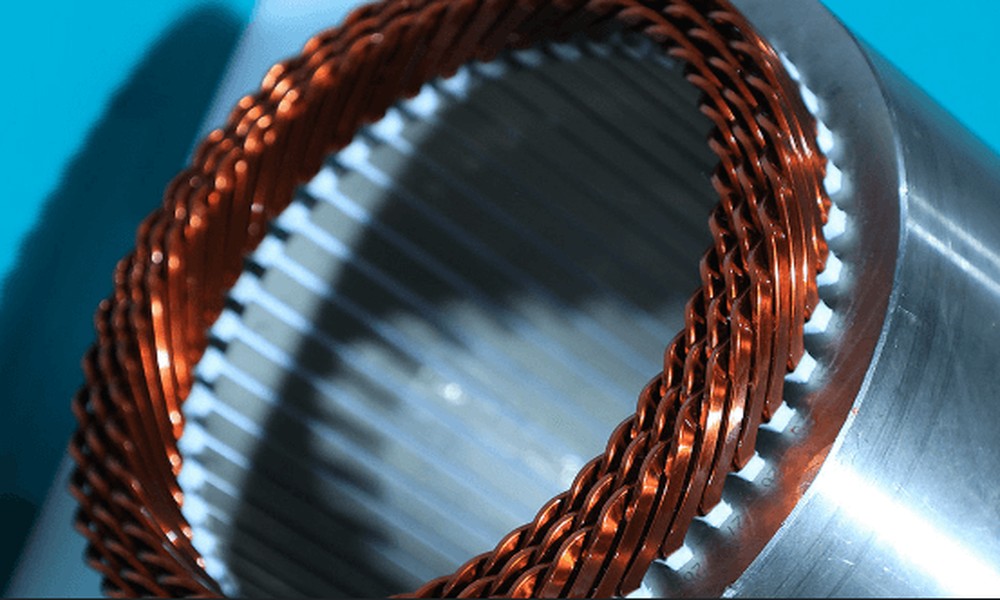
The rapid growth of electric vehicles, industrial automation, and high-efficiency electric motor production has created strong demand for precision manufacturing equipment. One of the most important processes in modern motor production is the preparation of copper conductors used in stator windings. For hairpin-based motor designs, this begins with accurate forming of rectangular copper wires into precise shapes. This is where the hair pin making machine plays a critical role.
A hairpin making machine is specialized equipment designed to form, cut, straighten, and prepare copper conductors into hairpin shapes used in electric motor stators. As industries increasingly adopt hairpin winding technology, selecting the right hairpin making machine has become an essential decision for manufacturers aiming to ensure efficiency, accuracy, and consistent production quality.
Understanding the Role of a Hair Pin Making Machine
In hairpin winding technology, the quality of the final motor largely depends on the precision of the copper hairpins used in the stator. Even minor deviations in shape or dimension can affect insertion accuracy, electrical performance, and overall motor efficiency.
A hair pin making machine automates the process of transforming raw rectangular copper wire into precisely formed hairpins. The machine performs multiple steps such as straightening, cutting to length, bending, shaping, and surface preparation.
This automation ensures that each hairpin meets strict dimensional tolerances, which is essential for high-performance electric motors used in electric vehicles and industrial applications.
Why Precision Matters in Hairpin Manufacturing
Precision is the foundation of successful hairpin winding production. Since modern electric motors require tight tolerances, even small errors in conductor shape can lead to inefficiencies or assembly issues.
A high-quality hairpin making machine ensures uniformity across thousands of produced components. This consistency improves stator assembly efficiency and reduces the risk of defects during insertion or welding.
Precise manufacturing also contributes to better electrical contact between windings, which directly improves motor efficiency and thermal performance. For manufacturers operating in high-volume production environments, this level of accuracy is essential for maintaining product quality.
Key Features to Look for in a Hairpin Making Machine
When selecting a hairpin making machine, manufacturers should evaluate several important technical and operational features.
High Precision Forming System
The forming system is the core component of the machine. It determines how accurately the copper wire is shaped into hairpins. Advanced servo-driven systems provide higher precision and better repeatability compared to manual or basic mechanical systems.
Automation and Production Speed
Modern production environments require fast and efficient equipment. A good hairpin making machine should support high-speed operation while maintaining consistent quality. Automation reduces manual intervention and increases overall productivity.
Flexibility for Different Wire Sizes
Motor manufacturers often produce different types of stators requiring various wire dimensions. A flexible machine that can handle multiple copper sizes provides greater production versatility and long-term value.
Integrated Quality Control Systems
Some advanced machines include real-time monitoring and inspection systems. These features help detect defects early in the production process, reducing waste and improving overall efficiency.
Easy Maintenance and Durability
Industrial environments require machines that can operate continuously with minimal downtime. Durable construction and easy maintenance features help ensure long-term reliability and lower operating costs.
How Hair Pin Making Machines Improve Motor Production
The use of a hairpin making machine significantly improves the efficiency and consistency of motor manufacturing processes. By automating the formation of copper conductors, manufacturers can reduce labor dependency and minimize human error.
Consistent hairpin quality also improves downstream processes such as stator insertion and welding. This leads to better electrical performance and higher motor efficiency.
In high-volume production environments, automation ensures that manufacturers can meet growing demand without compromising quality. This is particularly important in the electric vehicle industry, where production scale and precision are both critical factors.
Importance in Electric Vehicle Manufacturing
Electric vehicles are one of the biggest drivers of hairpin winding technology adoption. EV motors require high efficiency, compact size, and reliable performance under various operating conditions.
A hairpin making machine plays a foundational role in achieving these goals by ensuring that copper conductors are accurately shaped for stator assembly. This precision directly contributes to improved motor efficiency, which helps extend vehicle driving range and enhance performance.
As EV production continues to expand globally, demand for high-performance hairpin manufacturing equipment is also increasing rapidly.
Automation and Industry 4.0 Integration
Modern hairpin making machines are increasingly integrated with Industry 4.0 technologies. These systems enable real-time monitoring, data collection, and intelligent process control.
Smart manufacturing features allow operators to track production efficiency, detect anomalies, and optimize machine performance. Predictive maintenance capabilities also help reduce unexpected downtime and improve operational reliability.
This level of digital integration is becoming a standard requirement in advanced manufacturing environments.
Common Challenges in Hairpin Production
Despite its advantages, hairpin production presents several challenges. Maintaining precise dimensional accuracy, ensuring consistent material quality, and achieving efficient production speed can be difficult without advanced equipment.
Manual or low-quality machines may produce inconsistent results, leading to inefficiencies in downstream motor assembly. This can affect motor performance and increase production costs.
Investing in a high-quality hairpin making machine helps overcome these challenges by ensuring consistent output and reducing variability in production.
Choosing the Right Supplier
Selecting the right supplier is just as important as choosing the machine itself. Manufacturers should consider supplier experience, technical expertise, after-sales support, and availability of spare parts.
A reliable supplier can provide installation support, operator training, and long-term maintenance services. This ensures smooth production and reduces the risk of operational disruptions.
Working with experienced manufacturers also helps ensure access to the latest technological advancements in hairpin production equipment.
Future Trends in Hairpin Making Technology
The future of hairpin making machines is closely linked to automation, artificial intelligence, and advanced manufacturing technologies. Machines are becoming faster, more precise, and more intelligent.
Future systems are expected to include improved adaptive control, enhanced quality monitoring, and greater integration with fully automated motor production lines.
As electric motor technology continues to evolve, hairpin manufacturing equipment will play an increasingly important role in supporting global production demands.
Conclusion
The hair pin making machine is a critical component in modern electric motor manufacturing. It ensures the precise formation of copper conductors used in hairpin winding systems, directly influencing motor efficiency, performance, and reliability.
By selecting the right hairpin making machine, manufacturers can improve production speed, reduce errors, and achieve consistent product quality. As demand for electric vehicles and high-efficiency motors continues to rise, advanced hairpin manufacturing solutions will remain essential for competitive and scalable production.
Investing in high-quality equipment today helps manufacturers stay prepared for the rapidly evolving future of electric motor technology.
