

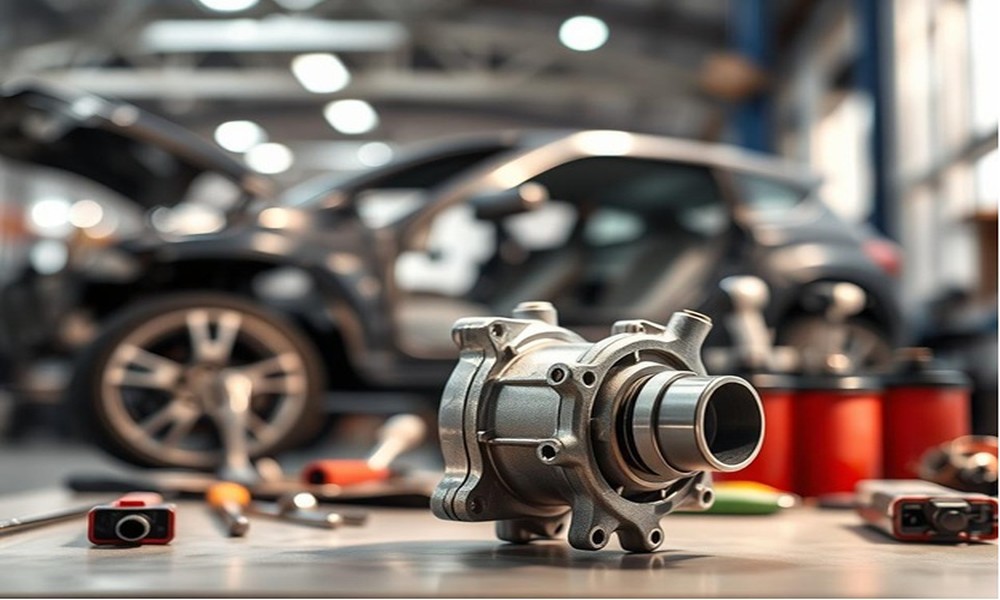
Your car’s water pump works quietly to keep the engine cool. It moves coolant through the engine and radiator. This helps heat escape quickly.
But if the flow slows down, the engine gets hotter. This makes it harder to keep it cool.
Knowing when to replace the water pump isn’t just about miles. It’s about keeping the cooling system in good shape. Look out for signs like coolant loss, puddles, a hot gauge, rust, or a new whining sound.
For many in Australia, replacing the water pump happens between 60,000 and 100,000 miles. But it’s not always predictable. Some pumps last longer, while others fail sooner due to heat, long drives, or neglect.
If you bought your car used, check if the water pump has been replaced. Replacing it can be affordable, with parts under $50. But labor costs can add up because of tight engine access. Knowing water pump failure symptoms can help catch problems early.
Key Takeaways
- A healthy car water pump supports coolant circulation and protects the engine from heat damage.
- When to replace water pump components depends on miles and on warning signs, not just a calendar.
- Common water pump failure symptoms include overheating, coolant leaks, rust, grime buildup, and new whining noises.
- Many vehicles fall into a 60,000-100,000 mile window, but conditions and maintenance can shift that range.
- Used-car owners should confirm past water pump replacement to avoid surprises.
- Cooling system maintenance can reduce risk and help prevent engine overheating before it starts.
What a Water Pump Does in the Cooling System in the Cooling System
The car water pump function is simple but vital. It keeps coolant moving so the engine stays cool in all Aussie weather.
As coolant moves from radiator to engine block, the pump pulls in cooled fluid. It then pushes it through passages around the cylinders and head. This flow prevents overheating in traffic or on long grades.
Inside, the water pump impeller spins fast like a fan in liquid. This motion creates a low-pressure area at the inlet. Then, it speeds the coolant toward the outlet, keeping the loop moving.
Drive style affects the pump’s speed. Many engines use a timing belt driven water pump. Others run the pump off a chain or accessory belt, so its speed changes with engine rpm.
If coolant circulation slows, heat builds fast, and the gauge can spike. Trouble can also come from other parts, like a stuck thermostat or a blocked radiator. So, it’s wise to check the whole system before blaming one part.
|
Cooling system component |
What it does |
What you may notice if it can’t keep up |
|
Water pump |
Maintains coolant circulation from radiator to engine block under load |
Temp rises at idle, weak cabin heat, overflow bottle level swings |
|
Thermostat |
Controls when coolant starts flowing to the radiator |
Sudden overheating, slow warm-up, temperature needle hunts |
|
Radiator |
Releases heat to outside air after coolant leaves the engine |
Runs hot on the highway, fins clogged with debris, hot smell after a drive |
|
Hoses and clamps |
Carry coolant between engine, radiator, and heater core |
Damp spots, sweet odor, low coolant level over time |
Car Water Pump Replacement Intervals and Mileage Guidelines
When it comes to replacing a car water pump, there’s no one-size-fits-all answer. Most experts suggest doing it between 60,000 and 90,000 miles. But if you keep your car clean and sealed, it might last up to 100,000 miles.
Many drivers might not need to replace their water pump at all. If you don’t keep your car for more than 10 years, you might not have to. But ignoring small issues can lead to overheating problems.
For many cars, the timing belt and water pump need to be replaced at the same time. This is because they are close together. Replacing them together saves on labor costs.
|
Planning point |
Typical mileage window |
What it usually means |
|
Early planning range |
Replace the water pump 60,000 miles |
Often paired with the timing belt interval to avoid repeat labor |
|
Common guidance band |
90,000 miles |
Many owners watch for early seepage, noise, or coolant loss |
|
Upper end for normal service |
100,000 miles |
More likely when coolant condition is good and seals stay dry |
Mileage is just one factor. Extreme heat, city driving, bad coolant, or neglect can wear it out faster. Signs like leaks or strange noises can also mean it’s time for a new one.
Before deciding, make sure you know the real problem. Coolant issues can come from many places, not just the pump. A thorough check of the cooling system is key.
Warning Signs Your Water Pump May Be Failing
Bad water pump symptoms often start small but grow quickly. If your temperature gauge goes back to normal on your drive, it might mean coolant isn’t flowing right. This can cause your engine to overheat, even when it’s not very hot outside.
A coolant leak is a clear sign. Look for a sweet smell, puddles after parking, or coolant levels that keep dropping. Leaks often appear near the engine’s front or center, and sometimes near the timing belt if a seal or gasket is failing.
Steam under the hood is another warning sign, often seen after stopping at a light or driving briefly. This steam means the cooling system is already stressed. The next drive can make the engine temperature rise even more.
Listen for whirring or whining noises at low speeds. These sounds can mean worn pump bearings, a loose pulley, or a belt that’s not tracking right. Sometimes, an impeller problem inside the pump can cause a sharp, uneven sound as you change speeds.
Don’t forget to look for signs of rust corrosion on the water pump. Stains, crusty residue, or grime around hose joints can signal slow leaks. Rusty coolant marks on the engine’s outside also hint at a long-standing leak.
|
What you notice |
What it can mean |
Where it often shows up |
Why it matters |
|
temperature gauge high or warning light appears |
Coolant flow is reduced or inconsistent |
During traffic, hills, or warm days |
Rising temps can quickly trigger an overheating engine |
|
coolant leak and frequent top-ups |
Seal, weep hole, or gasket seepage |
Front/center of the engine; sometimes near the timing belt |
Low coolant can lead to air pockets and rapid heat spikes |
|
steam under hood after a drive |
Coolant is boiling off due to high heat |
Near the radiator, hoses, and pump area |
Steam often signals the system is already past its comfort zone |
|
whirring noise that rises with RPM |
Loose belt, pulley play, or bearing wear |
Engine front accessory drive area |
Noise can be an early warning before a larger failure |
|
whining noise or buzzing tone |
Bearing damage or internal impeller trouble |
Near the water pump housing |
Parts can degrade quickly once the sound starts |
|
rust corrosion water pump residue or crusty buildup |
Long-term seepage, contaminated coolant, or oxidation |
Around the pump body, bolts, and hose connections |
Corrosion can weaken seals and worsen leaks over time |
These signs are important because a weak pump can’t move coolant through the engine. When coolant flow drops, heat rises fast. This increases the risk of damage with every mile. If you see leaks, noise, and heat together, waiting will only make the problem worse and more expensive.
What to Do If the Engine Overheats on the Road
When your engine overheats, safety comes first. Keep an eye on the temperature gauge and warning lights. Also, watch for steam or a hot smell.
Overheating can be caused by a failing water pump, a stuck thermostat, or low coolant flow. It can also be due to a leak.
As soon as it’s safe, pull over to protect the engine and everyone in the car. Shift into Park, set the parking brake, and turn off the engine. Idling can make the temperature rise even more, if coolant isn’t flowing.
Let the car cool down before you do anything else. Don’t open the hood while it’s hot. Hot coolant and steam can cause serious burns.
After it cools, check the coolant level if it’s safe and you have the right fluid. Look for a visible coolant leak, like wet spots or a sweet smell. If the water pump is broken, coolant may not move, and the temperature can rise fast again.
- Pull over safely and switch on hazard lights
- Turn off the engine and wait for the temperature to drop
- Do not open the hood until the heat has eased
- Do a coolant level check and scan for a visible coolant leak
|
What you notice |
What it can mean |
Best next move |
|
Temperature gauge rises quickly after driving |
Coolant may not be circulating; a water pump issue is possible |
Pull over safely, turn off engine, and let it cool fully |
|
Steam from the front of the car |
Coolant may be boiling or escaping under pressure |
Do not open hood; wait, then check for a visible coolant leak |
|
Puddle or drip under the engine bay |
Cooling system leak, which can trigger overheating |
Coolant level check only after cooling; avoid driving if it drops again |
|
No clear signs but repeated overheating |
Could be thermostat trouble, radiator fan issues, or flow restrictions |
Arrange mechanic inspection to pinpoint the cause |
If you can’t find the cause or the temperature goes up again, don’t drive further. Call a towing service to avoid damage and high repair costs. A mechanic can then check the pump, thermostat, hoses, radiator, and pressure cap safely.
How to Confirm a Bad Water Pump Before Replacing It
Before you spend money, test car water pump symptoms with a few quick checks. Many cooling problems seem the same from the driver’s seat. It’s wise to confirm the source before you pay.
Start simple: look for water pump leak clues around the engine’s front. Check the pump body and hose connections. Dried coolant, rusty stains, and damp grime near the weep hole can show a seal problem.
Next, test the heater while the engine is warm. If the cabin heater stays lukewarm, it might mean weak circulation or trapped air. Or, it could be a thermostat issue that needs a closer look.
Sound is important too. A steady whine, grind, or chirp near the drive belt could be water pump bearings noise. A loose belt can also sound like pump trouble, so watch for wobbles at the pulley while listening.
Also, watch the temperature gauge during normal driving. If it swings or climbs, ask for scan data. This data compares the coolant exit radiator temperature to the engine load. Unstable readings mean a flow test to see if coolant is moving right.
If you’re unsure, check out water pump failure signs. The key idea is to check the whole cooling system. Leaks, overheating, and low coolant can come from hoses, the radiator, the cap, or the thermostat too.
|
Check |
What You Do |
What It Can Suggest |
Why It Matters |
|
Leak and surface scan |
Inspect water pump leak areas, hose joints, and the pump weep hole for wetness, crust, and rust staining |
Seal failure or corrosion that’s actively shedding coolant |
A leaking, corroded pump is a strong indicator the pump is no longer reliable |
|
Cabin heater output |
Run a heater test water pump check after warm-up and note if air is consistently hot |
Possible circulation problem, air pocket, or thermostat concern |
The heater core is a real-world proof point for coolant movement through the system |
|
Noise and pulley behavior |
Listen near the belt drive for water pump bearings noise and watch for pulley wobble |
Bearing wear, misalignment, or belt-related vibration |
Bearing failure can worsen fast and may lead to loss of coolant flow |
|
Temperature trend under load |
Watch gauge stability and compare scan data for coolant exit radiator temperature |
Hot spots, weak circulation, or inconsistent heat rejection |
Temperature swings often show up before a full overheat event |
|
Professional verification |
Have a technician test car water pump performance with a flow test when temps don’t make sense |
Confirms restricted flow versus a different cooling-system fault |
Helps avoid replacing the wrong part when symptoms overlap |
Related Parts Often Replaced at the Same Time
When a pump needs to be replaced, it’s smart to change the timing belt too. This is because many engines have parts that need to be removed together. Doing both at once saves time and reduces downtime.
Replacing the thermostat is also a good idea. It helps control the coolant flow after the pump. In some cars, the thermostat is inside the water pump housing, making it easy to replace both at once.
Cooling fans should also be checked. A weak fan clutch can cause the engine to overheat, which can damage a new pump. If the fan clutch feels loose or wobbly, it’s usually fixed during the same service.
Checking belt drive parts is important too. A noisy pulley or misalignment can sound like a pump problem. During a cooling system service, the pulley and other parts are checked for any issues.
Leaks are another reason to replace parts together. A worn gasket can leak slowly, causing damage. New seals help keep the coolant system working properly.
|
Part often paired with a pump |
Why it’s checked or replaced |
Common signs during inspection |
|
replace water pump and timing belt |
Shared access lowers repeat labor and helps keep cam timing components on a matched schedule |
Cracks on the belt, coolant stains near covers, age-based interval due |
|
thermostat replacement |
Controls flow and warm-up; a sticky unit can mimic pump trouble |
Slow cabin heat, temp swings, overheating at idle |
|
water pump housing assembly |
Some vehicles integrate coolant passages and the thermostat into one unit |
Corrosion pitting, warped sealing surface, coolant tracks at the joint |
|
fan clutch |
Cooling performance affects pump load and overall heat control |
Roaring fan noise, weak airflow at idle, overheating in stop-start traffic |
|
pulley |
Alignment and bearing condition protect belts and reduce false “pump” noises |
Wobble, squeal, belt dust, uneven belt wear |
|
gasket |
Seals mating surfaces and supports proper system pressure |
Coolant smell, crusty residue, damp edges around the pump area |
|
cooling system service |
Clean coolant and stable pressure help protect new parts from debris and hot spots |
Cost and Longevity Considerations for Water Pump Replacement
Most water pumps last 60,000-100,000 miles. But, how long yours lasts depends on your driving and coolant care. Some cars might never need a new pump, but ignoring a problem can cause sudden overheating.
Replacing the pump can be costly. The part itself is usually under $50. But, the job is often hard to do because of tight spaces and many parts in the way. Always ask for a detailed quote to understand the costs.
Replacing the water pump with timing belt work can save money. Both jobs need the same covers and parts removed. Doing them together can reduce labor costs and downtime.
Ignoring leaks, grinding noises, corrosion, or heat spikes can cost more. Overheating can damage metal and seals, leading to expensive repairs. Replacing the pump early can prevent these problems and keep your engine running longer, even in hot weather.
